Navigating Resilience: Lessons from the Field as an Intern with Nile Basin Discourse in Ethiopia
Published: 10 February 2026
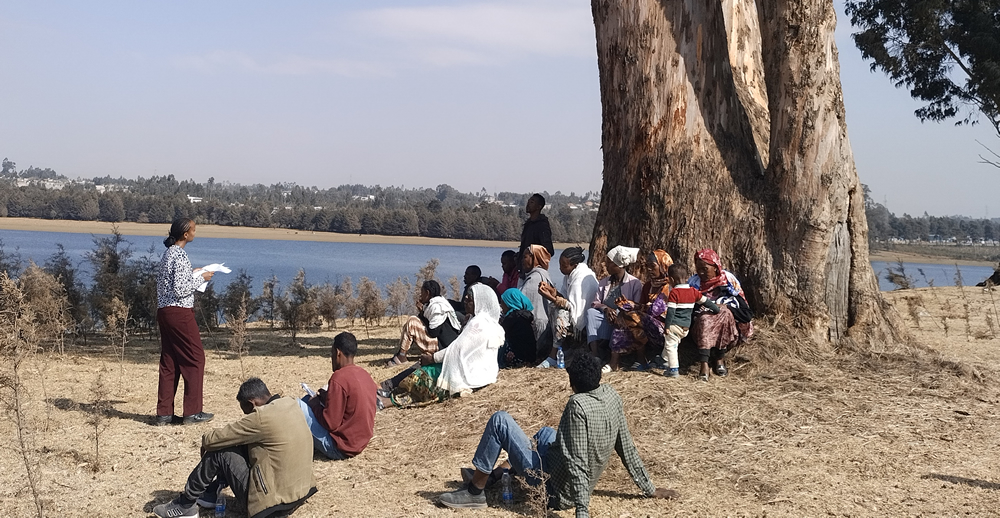
Tsion engages selected community members in a discussion on indigenous knowledge and the barriers women face in accessing resources. Guje Wereda, 20 February 2026
Tsion Demisse Zerga’s internship with the Nile Basin Discourse offers a grounded, personal journey from policy theory to frontline realities. Through field engagements, community dialogues, and regional exposure, she reflects on how working directly with communities reshaped her understanding of climate resilience, youth inclusion, and environmental justice, revealing an experience that is as transformative for her professional growth as it is impactful for the communities she serves.
Since November 2025, my journey with Nile Basin Discourse (NBD) under the Nile Civil Society for Climate Resilience (NCSCR) project has been more than just an internship it has been a master class in the intersection of grassroots reality and regional policy.
As I reflect on my activities over the past few months, three core themes emerge: the power of community voice, the necessity of youth inclusion, and the evolving landscape of climate justice.
From Theory to the Field: Engaging Communities
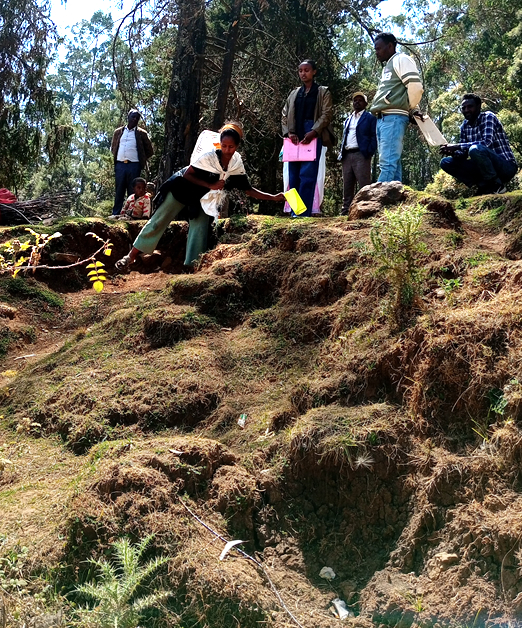
Hazardous, steep paths that women must navigate daily, often in pre-dawn hours to reach the lower stream beds. Guje Wereda, 24 January 2026.
The heart of my experience has been centered on field activities. Engaging with local communities along the Nile Basin has shifted my perspective on climate resilience. I have learned that resilience isn’t a technical metric; it’s the ability of a farmer to adapt to shifting rains or a community’s capacity to manage shared water resources during a drought.
Facilitating these dialogues taught me that civil society serves as the vital connective tissue between high-level basin cooperation and local livelihoods. Seeing how NBD amplifies these often-unheard voices has been the most rewarding part of my tenure so far.
A Personal Path to Environmental Justice
Parallel to my formal responsibilities, I’ve sought to deepen my understanding of the broader climate movement. Through my network, I had the opportunity to attend the Eco-Justice Ethiopia - The Great Debate 'The African Development Crossroads'. This experience was pivotal. It allowed me to bring fresh, intersectional perspectives on energy future and fossil fuel investments back to my work at NBD.
Integrating these external insights has helped me see that the Nile Basin’s challenges are not just environmental they are social and political. My personal growth at Eco-Justice Ethiopia served as a perfect "value-add" to my contributions within the NCSCR project, reinforcing the idea that a young professional’s personal initiative can directly benefit their institutional work.
Reflections on NBD: A Bridge for Discourse
NBD occupies a unique and necessary niche. It provides a platform for “discourse” a word that implies more than just talking; it implies the democratic exchange of ideas for a common goal. I have been deeply impressed by the organization’s commitment to making sure that Nile cooperation is not just a government-to-government affair, but a people-to-people movement.
Looking Ahead: A Wish for the Future
While my experience has been overwhelmingly positive, I believe there is an opportunity to push the boundaries further. My "wish" for NBD is to see an even more robust framework for Youth-Led Research and Advocacy.
The next generation of water professionals needs to move from being observers in the field to being active architects of policy. I hope NBD continues to pioneer mentorship structures that allow interns and young civil society leaders to present their findings directly to regional decision-makers.
As I continue my work, I am grateful to NBD for the space to learn and lead. The Nile Basin is a landscape of immense challenge but even greater opportunity. By continuing to bridge the gap between community needs and regional strategies, we can ensure a resilient future for all who call this basin home.
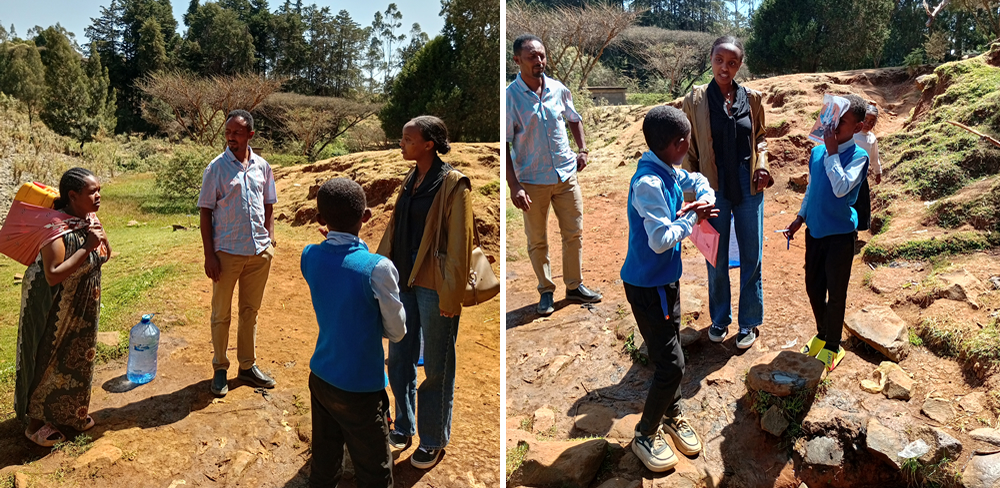
The writer holds a conversation with a mother and young learners at a water collection point, documenting the direct impact of water scarcity on school attendance and academic performance. Guje Wereda, 24 January 2026.