"Failure to Act in The Restoration of Ecosystems Is to Fail Biodiversity and The Fight Against Desertification"
On June 24, 2021 at CIBITOKE province, MUGINA commune, RUGAJO zone on RUGENDO hill in Burundi, Burundi National Discourse Forum (BNDF) (Burundian Forum of the Civil Society of the Nile Basin (FCBN)) joined the Ministry of Environment, Agriculture and Breeding to a colourful event to observe the days dedicated to Water quality, the fight against Desertification and Drought, protection of Biodiversity and the Environment, which were coupled with the World Day for Recycling of biodegradable products, and the launch of the forestry campaign “Edition 2021-2022” under the theme: "Failure to Act in The Restoration of Ecosystems Is to Fail Biodiversity and The Fight Against Desertification"
Among distinguished participants was the Permanent Secretary at the Ministry of the Environment, Agriculture and Livestock – representing the Minister, the Governor of the Province of CIBITOKE, the Hon. Deputies and Senators elected in this constituency, the Municipal administrators, Representatives of NGOs and local associations, partners and senior executives of ministries, and the grassroots community.
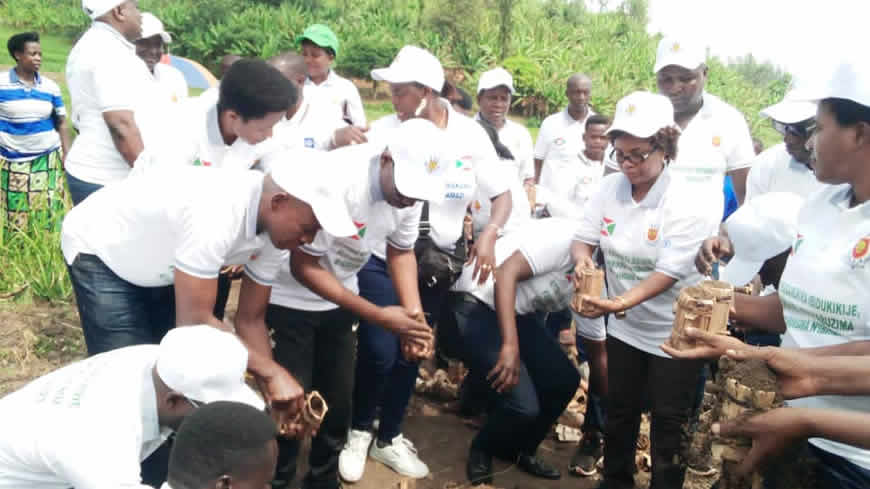
The day’s activities started with the Permanent Secretary launching the preparation of a tree nursery to serve Rugendo hill; filling biodegradable bags with soil/manure, sowing seeds, and arranging the seed-bags into a seed-bed.
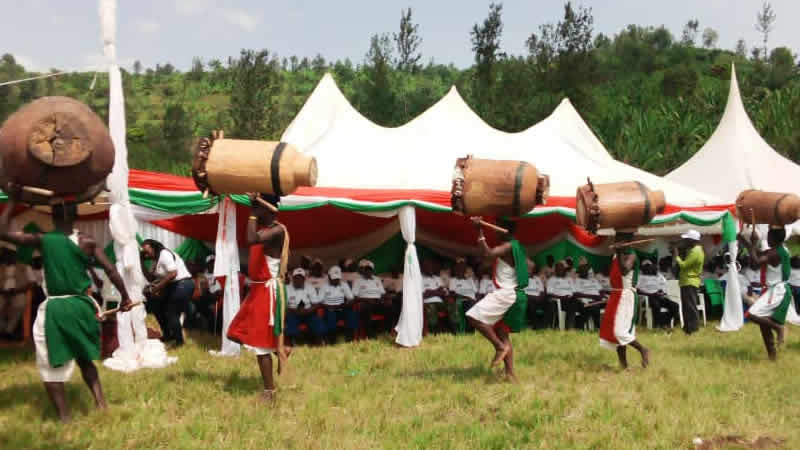
The Governor of the province of CIBITOKE warmly welcomed participants, and thanked the Government of Burundi in particular the Ministry of Environment and Livestock for choosing the province of CIBITOKE to organize the ceremony. The festival was graced by cultural dance presentations that made the day colourful and revellers happy throughout
In his speech, the Permanent Secretary (PS) highlighted that it was the first time that Burundi celebrates the World Day of Recycling of biodegradable products and that the ministry chose to combine celebration of these days because they are complementary; we cannot talk about water without trees.
The PS also noted that this year’s festival is five-fold – including Water Day, the fight against Desertification and Drought Day, Biodiversity and the Environment Day, World Day for the Recycling of biodegradable products, and the Silviculture campaign Edition 2021-2022; all cerebrated under the theme "Failure to Act in The Restoration of Ecosystems Is to Fail Biodiversity and The Fight Against Desertification"
Elaborating on the significance of the five days, this is what the PS had to say:
Water Day:The government wants water to be plentiful and clean. Water sources should be protected and there should be enough water to support crop irrigation.
Environmental protection: Protection of the environment is necessary; it is a direct contribution to good climate. This is why the Government of Burundi initiated the "EWE BURUNDI URAMBAYE" reforestation project.
Ecosystem protection: Preserving flora and fauna generates income for the country, protects crops, and reduces the risks associated with natural disasters.
The fight against Desertification and Drought: Desertification and drought cause famine and subsequently poverty as arable land becomes barren and lacks moisture/water/rain. Disasters become more frequent, - causing human and material damage. Deforestation and tree cutting must be avoided in an anarchic manner. Trees should be planted on mountains and slippery soils, contour lines and soil-fixing grass planted to control erosion.
Recycling of biodegradable products:This is the first time this holiday has been celebrated in Burundi. People must always use products that are biodegradable to increase soil fertility. The use of non-biodegradable products causes sterility of the soil.
Ending his speech, the PS emphasised that the intention of the celebrations is to remind Burundi citizens to implement measures taken by the Government and its partners. He called on CSOs/NGOs/CBOs to come to the aid of the population in the preservation of nature by facilitating the digging of contour lines and planting trees on all mountains in order to fight against erosion and deforestation. He also thanked the partners who gave their financial or technical support for the celebration to take place.
The participation of Burundi NDF (FCBN) and CSOs in the activities and meetings organized by the Ministry in charge of environment provides a platform for Civil Society participation, support and representation of grassroots in the strengthening of environmental governance and the protection of ecosystems. Civil Society helps the government to realise inadequacies and realign policies for better management and protection of the environment. The overarching challenge of CSOs today is funding and Burundi NDF/FCBN is not spared. Once the FCBN has funds, it could develop projects to help the government overcome these shortcomings.
Author: Fabrice AHISHAKIYE National Technical Expert – Burundi NDF
“I have a small business and a medicine shop by the road side, I used to be burdened by the bad smell of garbage. I could sell lots of medicine for diseases like malaria, typhoid, diarrhea, respiratory diseases, and skin disease. But now the road is clean, no more bad smell and the sales of medicines for the aforesaid diseases has declined. The environment and the aesthetic view of the surrounding area has been enhanced.” Jada Tongun , Kator, payam - Juba
Solid waste and its disposal constitute a growing problem and has gained increased political and Environmental awareness over recent years. The amount of solid waste generated and disposed off in Juba, South Sudan is steadily increasing and the government is currently focusing on methods to approach the severity of solid waste.
Solid Waste is an unavoidable byproduct of human activities. Economic development, urbanization and improved living standards in cities such as Juba have led to an increase in the quantity and complexity of solid waste generated. Rapid population growth and industrialization degrades the urban ecosystem and exerts serious stress on natural resources, which undermines equitable and sustainable development. Inefficient management and disposal of solid waste is an obvious cause of environmental degradation to most cities of the developing world.
Municipal corporations of the developing countries such as South Sudan are not able to handle increasing quantities of solid waste, which results in accumulation of poorly disposed waste on roads and in other public places; this waste ends up in water bodies - the Nile inclusive. There is a need to work towards a sustainable solid waste management system, which requires environmental, institutional, financial, economic and social sustainability. The purpose of MUNICIPAL SOLID WASTE management (MSW) system is to improve the present practices of MSW that prevail in many developing countries where it has received sufficient attention. This article describes the present scenario of the SWM practices carried out in Kator Payam, Juba County – Juba City.
Kator is one of the settlements in Juba under the jurisdiction of Juba City in terms of services and waste management. Kator is located in the southern part of Juba town, a few meters to the bank of River Nile, covering an area of 0.87km2. It has a stream called Lobuleit - along which slum residents dump waste and when it rains, the waste flows to the Nile. Many of the Households in Kator live in the slum, with more than 100 shops available by the road side. The road leading to para/slum was always littered with scattered waste; users of this road were however not bothered about this situation. There was no specific place for waste gathering and disposal so the slum dwellers and shop owners dumped waste by the road side in a scattered manner; some would even dump it in Lobuleit streams. People walked by the stashes of stinking waste, covering noses by their hands. Both adults and children suffered from the bad odor, diarrhea, respiratory diseases, and skin infections among other ailments.
Most people in Kator earn their livelihood through engaging in small scale business like selling locally brewed alcohol, wood and charcoal selling, vending food stalls, employment as maids and house helps, and running petty errands. The area is not connected to tap/safe water, and unemployment and poverty rates are high.
Initial effort by Conserve the Environment – South Sudan (CESS) and Community Based Organization (CBO), both members of the South Sudan NDF partnering with Kator Quarter Council to overcome the problem of solid waste management was never successful. CESS and CBO decided to counter the problem on their own. A Waste Management Committee was formed in the Kator community and trucks were hired through mutual agreement with owners - given the responsibility to collect waste from households and shops by the roadside; and dispose it at the City landfill/dumping site. After this initiative, the community became more vigilant and disposal of waste on the roadside is no more. CESS and CBO did awareness raising to slum dwellers and shop owners to continue collecting waste in the sacks/bags and submitting to trucks when the collection routine comes.
In appreciation of the effort made by CESS and CBO and the waste management committee, households and shop owners committed to pay 1000 South Sudanese Pound (SSP) each per month towards sustainability of the waste collection initiative. Currently, the roads remain clean with no odor and discomfort of people using it. The community is well pleased with the initiative and very glad to see the change with a lesson that if there is a will, there is a way.
Conserve the Environment – South Sudan (CESS) is a National Non-Governmental Organization and a member of the South Sudan NDF. The organization was strategically established to address challenges facing the local communities in their respective areas by initiating developmental projects/programs with the aim of enhancing the livelihoods of the local communities in rural areas
Article by: Dr. John Leju Celestino Ladu National Technical Support Expert - South Sudan NDF
Serengeti Development Research and Environmental Conservation Center (SEDEREC) is a non-governmental organization Registered in Tanzania Mainland and a member of the Tanzania Nile Discourse Forum(TNDF). The Mission of SEDEREC is to Link Nature Conservation and Human Developments so that both Nature and humankind co-exist; and the overal objective is to ensure equitable social economic development within sustainable a environment.
SEDEREC works to protect Lake Victoria's ecosystem through improved livelihoods, food security, and environmental conservation within populations bordering the Mara River basin. SEDEREC also works to reduce human-wildlife conflicts resulting from wild life movements from Serengeti National Park to villages within the basin.
Human-elephant conflicts mostly exists where human population and wild animals share resources outside protected areas. The negative impacts of these conflicts affect both humans and wild animals. The main negative impacts of Human-Elephants Conflicts are: water sources destruction, crop raiding, loss of lives for both humans and elephants, and killing of livestock. The end results of all these impacts Mara River since most of the population are highly dependent on Mara River basin for their daily living.
Data from Tanzania Wildlife Authority (TAWA) depicts a total of 1,069 human deaths, 642 human injuries, 792 livestock depredations, and 41,404 acres of crops damaged for the period 2012 to 2019 (National Human-Wildlife Conflicts Management strategy 2020-2024). Recent research on Human – Elephant Conflicts incidents trends show that Climate Change is the new driver for the conflicts. The deepening Climate change has propelled traditional human activities expanding to buffer areas around the park, while unpredictable change of rain season trends changed plants and water sources availability inside the park that leads the wild animals like elephants crossing over to villages for fresh fodder and water.
The ongoing project addresses Human – Elephant Conflicts in Climate change risks and water conservation within the Mara River Basin, eastern of Lake Victoria in Tanzania. The project works within 10 villages bordering Mara River Basin and Serengeti National Park; it also engages 8 Secondary school students and 25 groups of village youths as security guards who trained on Environmental conservation and Wild animal guarding.
Description of the project/ implementation
The Human – Elephant Conflicts (HEC) management project aims to address climate change risks, water conservation and improve coexistence between humans and elephants within villages adjacent to protected areas in Mara River basin. The project focuses on mitigating negative impacts of elephants within villages bordering the Serengeti National Park through capacitating a consortium of village-based elephants control groups registered to work on human - elephant conflict issues.
The project supports the establishment and registration of elephants control groups within 25 villages bordering the Serengeti National Park, provide training to the registered groups by Tanzania wildlife departments (District Game Offices and TAWA), and provide working tools and equipment for field work. The project also constructed 2 pilot village-based game posts within but nearer the border to the national park. The game posts are used by villagers for office and communication issues. The project works parallel with Grumeti Fund, a tourism investor who implements tourist activities and is committed to improving conservation and livelihoods of peoples in villages in western Serengeti. The Grumeti Fund have constructed a demarcation road and pilot electrical wire fence to separate 5 villages bordering the park – the same area where this project is being implemented.
Left:A section of a maize field destroyed by Elephants from Serengeti National Park; Right:Demarcation road and Electrical wire fence donated by Grumeti Fund
Village communities and elephant control groups are used to maintain and protect the electrical wire fence at their villages. The electrical fence is still under pilot research phase before it is extended to other areas. The Serengeti Maasai-Mara (SEMA- project) which is a trans-boundary project that links Maasai – Mara in Kenya and Serengeti in Tanzania also supports our own founded elephant control groups in 3 wards within the basin ecosystem. WWF through SOKNOT (Southern Kenya and Northern Tanzania) project have shown interest in community-based approach to work with existing village-based conservation institutions including Wildlife Management Areas (WMAs), village Game Scouts and water user associations.
HUMAN – ELEPHANT CONFLICT (HEC) - Success stories
The project contributed its experience during the stakeholders’ meeting in the establishment of Tanzania National Human Wildlife conflicts (HWC) management strategy 2020-2024 that was endorsed on 5th October, 2020 by the Ministry for Natural Resources and Tourism.
Improved communication between villagers and government game rangers as a result of training where village level groups are reporting elephant incidents, collect monthly data and reporting to government rangers.
Reduced monitoring costs by government rangers including vehicles and staff needed to respond to elephant incidences in the villages. Village groups are working on behalf of government rangers.
Reduced negative impacts of elephant attacks in village lands; village groups are timely responding to fugitive elephants before they attack and destroy village property and water sources.
The Tanzania Wildlife Authority (TAWA) are now working closely with village groups as community partners for conservation and wildlife protection matters.
The village groups have established microfinance schemes through weekly savings and loan services in their villages. They use the schemes’ weekly forums to learn water conservation issues including climate change adaptation and recovery measures.
Challenges the HEC project is facing
Despite the human-elephant conflicts mitigation, climate change has diverse risks that are not addressed by the project including gaps for sustainable water conservation and improved livelihoods. Increased extraction of water resources and the environment during prolonged drought seasons, causing destruction of upstream water flow systems.
Floods change traditional upstream water flow ways that lead to negative ecological impacts to the basin ecosystem, deviating water flow to communities which affects livelihood systems and social services. All that needs climate change adaptation and response plans that are not part of the current project.
Resettlement education from most vulnerable flood zones within the mara river basin are not yet implemented and as a result most of villages are continuously losing their farms, livestock and sometime human life when floods occur. This needs special attention in future plans.
Poverty is noted to be increasing within villages in the basin resulting to reduced morale in voluntary conservation issues addressed by the project. Alternative income generating projects are urgently needed to support the ongoing project. Marketing for local products is also needed.
Left:Locals receive donations of improved seeds for their farms to boost farm yields and food security; Right:Tangible increase in yields and harvest as a result of using improved seeds.
Conclusion
The main driver of Human-wildlife conflicts in the region is climate change, hence, mitigation of Human-Wildlife Conflicts within Mara River basin should go hand in hand with measures for mitigation and adaptation to Climate change risks within Lake Victoria upstream ecosystem.
The following extra interventions are required to sustainably conserve the basin ecology and improve livelihoods.
Empowering communities on water conservation and climate change adaption measures, preparedness and recovery options that will increase their resilience to the risks.
Enhance initiatives for improving local land use plan with prioritizing less impacted community activities adjacent to the basin that will reduce threat to water flows and also reduce expected community property losses during floods.
Introduce new projects that will increase alternative benefits to communities adjacent to the basin so as to increase value of the basin to communities.
Establish women and youth projects that will educate the community regarding climate change trends, adaptation measures and alternative recovery options.
Implement alternative initiatives to reduce water use conflicts especially during dry season including water allocation plans for domestic use, livestock, irrigation and other private use.
Protect natural water sources from threat of wildlife conflicts and pollution by human activities that can be made by simple fencing and improvement of water points.
Support community based local institutions including existing village groups and water associations to manage village level conservation and Human-wildlife conflict issues. This will further reduce management costs and increase ownership of interventions
SEDEREC joined TNDF in 2012 after showing interest in working with communities in Research and Environmental conservation around Mara River. It further stretched into Gender and Climate Change issues. TNDF plays a role of mediating SEDEREC in HEC project with the Government Agencies to reduce bureaucracy whenever it transpires. As an umbrella to its members, TNDF provides time to time consultations on creating awareness on Climate Change resilience, Gender, research, food security and conflict resolutions.

 Ending his speech, the PS emphasised that the intention of the celebrations is to remind Burundi citizens to implement measures taken by the Government and its partners. He called on CSOs/NGOs/CBOs to come to the aid of the population in the preservation of nature by facilitating the digging of contour lines and planting trees on all mountains in order to fight against erosion and deforestation. He also thanked the partners who gave their financial or technical support for the celebration to take place.

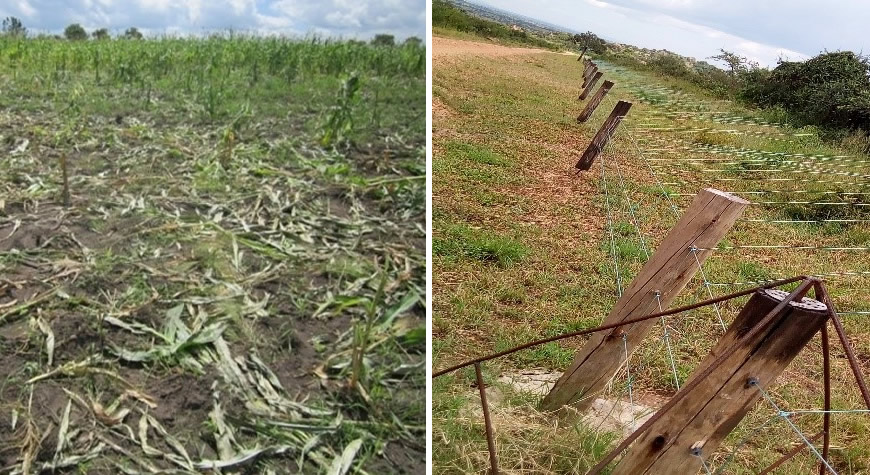 Left: A section of a maize field destroyed by Elephants from Serengeti National Park; Right: Demarcation road and Electrical wire fence donated by Grumeti Fund
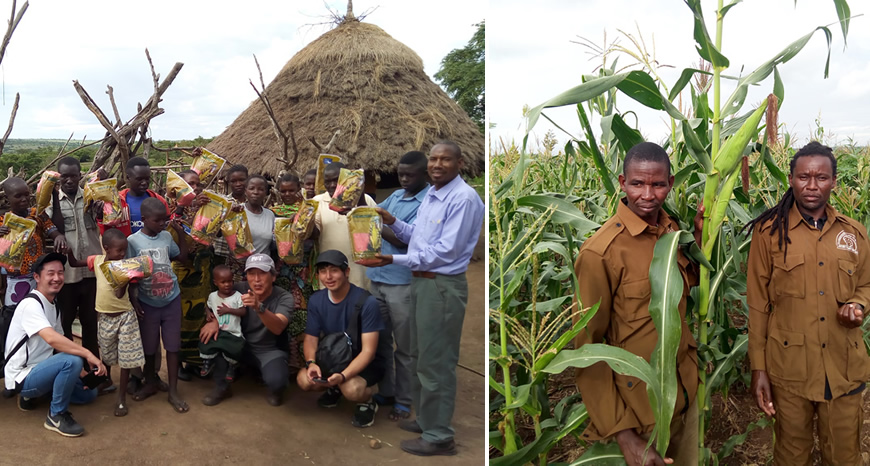 Left: Locals receive donations of improved seeds for their farms to boost farm yields and food security; Right: Tangible increase in yields and harvest as a result of using improved seeds.