TPL_YOOTHEME_SKIP_TO_MAIN_CONTENT
Women and children fetch water at the banks of river Nile. For decades, the Nile has been the main source of water for Egypt. Untill now, families fetch water from the riverbank. Photo Credit: David Boyer - www.nationalgeographic.org

River Nile; the Lifeline of Egypt's Water Economy

Egypt's water resource is estimated at about 60 billion cubic meters annually, most of it from the Nile River, in addition to very limited amounts of rainwater and deep groundwater in the deserts. In contrast, the total water needs in Egypt reach about 114 billion cubic meters annually...
The Nile River is the most prioritized issue that receives a lot of attention as it is the main source of water in Egypt; the same has been confirmed in numerous comprehensive and specific legal agreements with the Nile Basin riparian states, obligating everyone to respect it. In return, Egypt cooperates with the Nile Basin riparian states and participates in many of its development projects. Egypt has also contributed to the establishment of numerous dams and underground drinking water stations; has prepared the necessary studies for projects to build multi-purpose dams to provide electricity and drinking water with brothers in African countries.

Egypt's water resource is estimated at about 60 billion cubic meters annually, most of it from the Nile River, in addition to very limited amounts of rainwater and deep groundwater in the deserts. In contrast, the total water needs in Egypt reach about 114 billion cubic meters annually (according to the statement of the Minister of Water Resources on March, 2021).

Water challenges facing Egypt

The water sector in Egypt faces many challenges that the government is trying to deal with through finding practical solutions. These challenges are:
  • Population increase: is a major challenge to water resources. It is estimated that the total population in Egypt will exceed 175 million people by 2050, which represents a great pressure on water resources.
  • Climate change: is a major challenge to Egypt's water resources in light of the remarkable rise in temperature, as well as the extreme and unprecedented weather phenomena that Egypt is witnessing, such as intense rain that hits separate areas of the country; in addition to the rise in sea level and its dangerous negative impact on cities and coastal areas.
  • The uncertainties with the Ethiopian Renaissance Dam: and its likely impact on the waters of the Nile River is a major challenge facing Egypt; especially in light of the proposed plans by the Ethiopian government regarding filling and operating the Renaissance Dam, and the likely negative upshots resulting from executing these plans.


The existing water sources

Egypt is trying to maximize the benefits of the water resource, given that water is the mainstay of development and it has direct impact on the present and future Egyptian’s political, economic, and social security. Water resource in Egypt is limited to two types:

  1. Traditional sources
    - The Nile River: The Nile is the main source of water, as Egypt's share is 55.5 billion cubic meters, representing 79.3% of the water resources in Egypt, and covering 95% of the current water needs.
    - Underground water: The amount of the used groundwater in Egypt is estimated at about 6 billion cubic meters annually in the valley and the delta, and this amount can be increased in the future to reach 7.5 billion.
    - Rain: Rain is not a major source of water in Egypt due to the small amounts that fall in winter; about 1 billion cubic meters of rainwater fall on Egypt every year.
  2. Unconventional sources:
    - Reuse of agricultural wastewater: The annual average of agricultural drainage water is about 12 billion cubic meters. About 5 billion cubic meters are currently being reused. Efforts have been made to help increase it to 9 billion cubic meters in 2017, to be mainly used in agricultural expansion projects.
    - Treated waste water: Treated sewage water can be reused for irrigation, on condition that it meets the internationally recognized health conditions, as its quantity is about 2.5 billion cubic meters annually. About 1.3 billion cubic meters of this water is recycled for use desert cultivation projects.


Water uses in Egypt

Agriculture represents the largest part of water use in Egypt - amounting to about 65 billion cubic meters of the total uses in 2017/2018. The water needs of the industrial sector were estimated at about 4.5 billion cubic meters in 2018, of which about 9.4 billion cubic meters were actually consumed in 2018/2019 and the rest Returns to the Nile, canals and drains in a polluted condition.

As for drinking water and health use purposes, it is estimated at about 4% of the total use in 2018, according to the bulletin of the Central Agency for Public Mobilization and Statistics in 2019. The average percentage of losses in pure drinking water is estimated at about 9% of the total water; this is lost in dilapidated networks, homes, schools and government agencies.

Egypt's water needs until 2021

Egypt's total water needs are about 114 billion cubic meters annually, although the available share ranges between 60 and 61 billion cubic meters annually, including the annual share of Nile waters in addition to other sources such as groundwater. It is worth noting that Egypt is one of the driest countries in the world due to limited and unstable water resources coupled with a large population increase; this increase has registered about 25 million people in the last 10 years.

In order to confront the problem of water shortage, the government is working to treat all types of waste water to be suitable for reuse, and make the overall efficiency of water use in Egypt among the highest in Africa and the world. The government's efforts to raise water use efficiency are based on several axes, including lining of canals, using modern irrigation projects, and improving water quality and efficiency.


Author:
Elham Afify, National Technical Support Expert - Egypt


NBD – NELSAP Collaborative Trans-boundary Dialogues on NELSAP RUSUMO Project - October 2021

Between late November and early December 2021, NBD implemented trans-boundary communities dialogues on the trans-boundary Mara River Basin project -  a trans-boundary project of NBI’s NELSAP.

The implementation was done in collaboration with NELSAP, the Governments of the two riparian states of Kenya and Tanzania, participating institutions, and the beneficiaries of the shared investment project.

The dialogues were implemented as part of the activities under NBD's CIWA/WB supported project: “Engaging Civil Society for Social and Climate Resilience in the Nile Basin” in the areas of Bomet on the Kenya side and Tarime on the side of Tanzanian.

This briefing note highlights the outcomes and recommendations of the trans-boundary communities' dialogues.
The Uganda Nile Discourse Forum Delegation and the Climate Change Champions' Representatives Meet the Mayor and Deputy Mayor of the Southern Division in Jinja City

Women and Youth Climate Change Champions Engaging Communities for Environmental Sustainability

The trainees formed a network of Uganda Women and Youth Champions as a front to engage other stakeholders to develop meaningful and sustainable climate change action projects at personal, organizational, and institutional levels; beginning with creating pilot regional cities' demonstration centres - one City per region.

Uganda Nile Discourse Forum (UNDF), in partnership with the NBD Regional secretariat, built capacity of Women and Youth in Water for Environmental Sustainability and Climate Resilience under NBD’s CIWA/WB supported project “Engaging Civil Society for Social and Climate Resilience in the Nile Basin.”

Over sixty (60) Women and Youth leaders from across Uganda were trained in September 2021 after which they created a network of Climate Change Champions. The training provided participants with a wealth of practical water management and climate resilience knowledge, to enable them to asses, analyse and plan for focused, innovative, and sustainable water and environment management projects/programs.

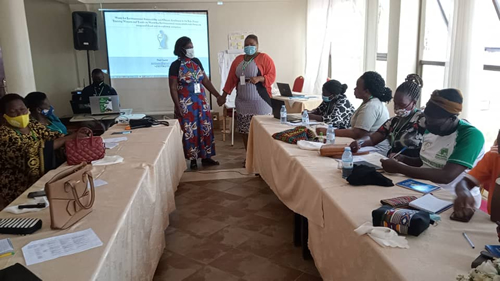
Women Climate Change Champions in one of the training sessions

Purpose for the training:

  • To build the capacity of Women and Youth on water for environmental sustainability, climate change resilience and Integrated Flood and Drought Risk Mitigation.
  • Identify and analyse roles and responsibilities of gender (both female and male) in water resources management and climate resilience with emphasis on combating social barriers for gender inequality and highlighting strategies for bringing women and Youth into the central decision-making roles in water.
  • Enhance knowledge of Women and Youth on green jobs and cleaner energy technologies as mechanisms for inter-generational environmental sustainability and climate change resilience.
  • To establish a network of Women and Youth to mobilize resources and implement projects contributing to the sustainability of UNDF network.

The training was expected to bring-forth the following outcomes:

  • A team of Ugandan Women and Youth Climate Change champions with improved knowledge and skills on water for environmental sustainability, climate change resilience, and integrated Flood and Drought Risk Mitigation.
  • Women and Youth Climate change champions’ capacity improved to engage fellow leaders and other decision makers to combat barriers for Women and youth engagement in water resources management and climate resilience decision-making.
  • Women and Youth champions’ knowledge enhanced on green jobs and greener and cleaner technologies, respectively as mechanisms for inter-generational environmental sustainability and climate resilience.
  • A network of Women and Youth champions set up to support their households, regions/cities/urban centres and NBD/UNDF to mobilize resources

Women And Youth Champions Engaging Other Stakeholders to Ensure Knowledge Transfer and Sustainability Of UNDF

The trainees formed a network of Uganda Women and youth champions as a front to engage other stakeholders to develop meaningful sustainable projects at personal, mother organizations, and UNDF/NBD institutional levels; beginning with pilot regional cities demonstration centres. This was a result of the action-based training of Champions empowered to set up project proposals that were reviewed by the resource mobilisation expert hired under the project. One City was selected per region of Uganda for a pilot project that would be replicated across the respective regions; Jinja City for Eastern Uganda, Masaka for Central Uganda, Gulu for Northern Uganda, and Fort portal for Western Uganda.
 
After the trainings, a team of experts from UNDF together with Champion leaders spearheaded the process of forming regional structures of UNDF starting with inception meetings with key stakeholders in these cities. The team met key Government officials at city level at both technical and political leadership. They met non-public stakeholders including Civil Society Organizations leaders, Private Sector leaders, Cultural and religious institutional leaders, among others.  
The ultimate objective of the mobilisation was to assist UNDF build a sustainable network of resources across the country through Structures where the trained champions would build climate resilience of human systems, ecosystems and economies. The Champions will at the end of the day set up projects through the mobilization of local/region/city specific knowledge and best practices hubs, enhancing institutional capacity, informing decision-making processes and facilitating access to resources.

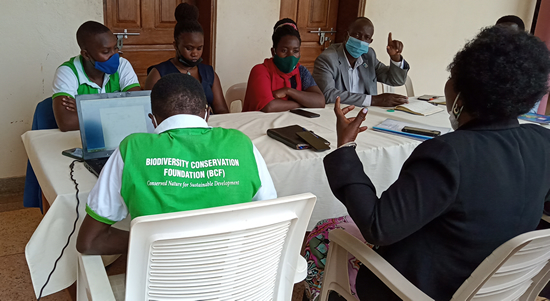
UNDF delegation with the Resource Mobilization Expert meet with Biodiversity Conservation Foundation - a member of UNDF
UNDF Board chairperson, the General Secretary, the Resource Mobilization Expert, the NTSE and
Central Region Champions meeting the Team from Biodiversity Conservation Foundation -
a UNDF Member Organisation.

The mobilisation and inception meetings led to various inputs into the conceived ideas and in summary all regions and cities focused on mainly four objectives including;

  1. To set up a climate smart demonstration centre for sustainable cities and communities.
  2. To enhance the tourism sector through beautifying/landscaping, branding, boosting community tourism.
  3. To enhance mind-set, change towards sustainable and green city.
  4. Advocate for innovative waste management practices at the source, through different stakeholder engagement at all levels starting with a modal village.

Way forward

The experts’ team at the UNDF Secretariat was tasked by city authorities to initiate a memorandum of understanding (MOU) that will be reviewed and signed by end of November 2021 between the cities and NBD/UNDF as appropriate. Among other things, the city stakeholders committed to meaningfully contribute and participate in the projects and mobilize other city communities for the success of the projects.

Follow up meetings are being made in each of the cities where the NTSE is invited to make final presentation of the project proposals to all key stakeholders in one room for final review and inputs/contribution of ideas. The proposals will then be shared with different partners and institutions already identified to contribute resources for their implementation beginning January 2021.

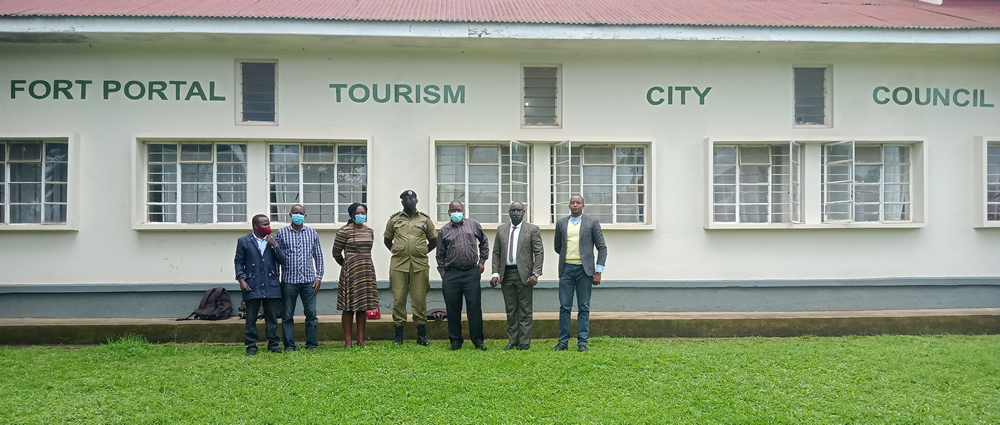
UNDF Secretariate Led by the NTSE meeting the City Clerk and the Western Region Police Spokes Person

Authors:
Mathias Mulumba, National Technical Support Expert - Uganda
Fred Ssendege, Coordinator KACODEP