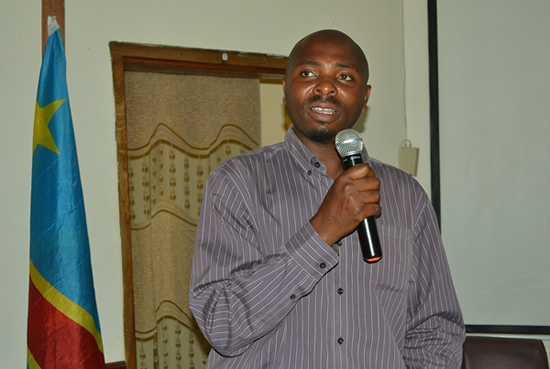
On November 6 every year, the world celebrates the International Day for the Prevention of Environmental Exploitation in War and Armed Conflict. In the Congolese Nile basin, NBD members operate in an insecure environment where natural resources are exploited by armed groups operating in Northern Kivu. Mr. Elias Paluku TAHAWASIMA, the DRC NDF National Technical Support Expert shares experiences and challenges the NDF Membership go through while contributing to the livelihoods of the grassroots communities in that region.
Knowing that some of your members operate in an environment where armed groups are found, what challenges do you encounter?Mr. Elias Paluku TAHAWASIMA, the DRC NDF National Technical Support Expert
Some of our members work in armed gang target areas and these organizations face several challenges in their daily work notably: sexual violence, kidnap, looting of their work tools, murder among others. This is what exactly happened 2 years ago, to the agents of our member Hydraulique Sans Frontière (HYFRO) in the territory of Rutshuru where 2 of its agents were killed and another kidnapped by the militia while they were constructing water tanks for communities in that area. Sudden militia attacks negatively affect regular implementation of activities, deeply traumatize both the staff of our member organizations and the communities that benefit from our intervention.
Share with us; what pushes you to continue your activities in this environment despite the almost permanent insecurity? Our members continue to work despite the insecurity because they are committed, and have a strong determination to work for the community, in the hope that this insecurity will one day end. So in order to properly carry out activities in such places, the first element to respect and control is information (communication) in all its forms: information about the movements of armed groups, information on the current security situation, information about the behavior of the local population towards armed groups, etc. Also, we target areas that are secure in a sense, because we cannot expose ourselves to danger. For insecure areas, we use locally recruited agents who have mastered in the field and have adapted to the circumstances, because these armed groups consider that an NGO agent, who works near them, is a spy for the benefit of the enemy. This is the case with the Mai Mai in the territories of Rutshuru, Lubero and Beni, and the CODECO militia in the province of Ituri. This is why they kidnap aid workers to demand huge sums of money for their release. In any case, we work under stressful conditions every day, living in fear that anything can happen to you while you are working. In 2015, KAMBALE LOBILO, a Coordinator of ADPDH - one of our member organisations from Rutshuru was attacked by a militia on his way to attend a DRC NDF members' meeting in Butembo, looting all his all his belongings including a phone, computer, clothes and money. He arrived at the meeting empty-handed; that is the life of the staff of our member organisations go through when armed conflict is at peak.
Are there cases where insecurity contributes to the exploitation of the environment in DR Congo, specifically in the Congolese Nile basin? Yes, there are a lot of them in the Congolese Nile Basin.
Can you give typical examples? We can cite a few in this story: Many armed groups are forming and / or finding refuge in the Virunga National Park which is the very first park created in Africa in 1925, and which is located entirely in the Congolese Nile Basin. This park is full of incomparable beauty of flora and fauna. But with the permanent presence of local and foreign militias and armed groups, there is the untimely cutting of trees for timbers, firewood and charcoal to make money. There is also an upsurge in the poaching of animals for meat and specifically elephants for tusks. During the last 2 decades, there was mass killing of Hippos whose waste used to contribute towards fish feeding in the surrounding water bodies which would result in an overproduction of fish in Lake Edward. But with what we call “environmental genocide” in the Park, the lake has become unproductive, with a decrease of fish volumes in the lake which is also accompanied by the increase in illegal fishing supervised by these same militias. Also, during wars, we witness destruction of forests by bombs and rockets, and wildfires from the local population's agricultural activities. In short, militias, armed groups and even the regular army are over exploiting the environment to meet their needs and enrich themselves by destroying the region's land and lake ecosystems. In the event of war, there is great pollution of the environment by light and heavy weapons. This causes massive displacement of some animals and birds from their usual environment to other places. In addition, the formation of camps for refugees and war displaced persons causes an upheaval in the environment around the camps, leading to cutting of wood all around, and an over exploitation of the environment to create farming fields by displaced people who want to protect themselves against hunger - in short they force life around the camp.
What message would you send out today on the International Day for the Prevention of Environmental Exploitation in War and Armed Conflict? First, I appeal for the establishment of peace throughout DRC in general and particularly in the Eastern part of the country which has long suffered from the atrocities of militias and whose consequences are clear. All local, national and international authorities will have to fight against the exploitation of the environment by armed groups and militias because the negative impact of this exploitation is visible in the community and actually affect beyond the environment; but livelihoods in these communities, particularly the impacts of sexual violence, murder, wild fires, un-productiveness of the soil, looting, the tourist deficit, growing poverty, illiteracy, etc. Thus, I will propose that the international community, especially the United Nations, initiate a law annexed to those found in the United Nations Charter which would qualify the exploitation of the environment in times of war and conflicts as a crime against humanity and that the culprits can be punished on an equal footing with those who commit crimes of genocide and other crimes. Also, the government at local and national level should get involved in securing the population and its environment.
Happy International Day for the Prevention of Environmental Exploitation in War and Armed Conflict
As the world celebrates the World water week amid the COVID 19 this year, NBD shares a message from one of our members, and actor in water, sanitation, and environment in Burundi, Mr Nestor MBURENTE.
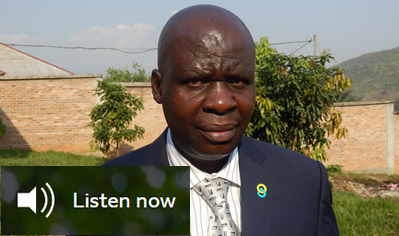
Mr. Nestor MBURENTE, is the Legal representative of AVEDEC (Association Villageoise d'Entraide et de Développement Communautaire) in Burundi. AVEDEC is member of Burundi Nile Discourse Forum. Being a member of different networks of organizations on Water and environment protection in Burundi, Nestor's organization bore the idea of bringing together different Water Sector actors to form National Observatory on Water and Sanitation (OBEA). OBEA brings together different actors in the water sector in Burundi. Click Image to Listen OR >>
OBEA was created on August 5, 2016, through Nestor MBURENTE and AVEDEC in particular. The idea was to create an exchange framework for the promotion of the right to water and sanitation in Burundi. Nestor is the first chairperson of the observatory who also just ended his term in office.
This is what he says about OBEA:
Why was OBEA created? Nestor: OBEA was created with an overall objective of contributing and improving dialogue and negotiations with political decision-makers, technical and financial partners, civil society organizations and the private sector working in the field of water and sanitation. The overall objectives emanate from the observatory’s vision which aims for “a Burundi where the right to water and sanitation is guaranteed for a dignified and healthy life for everyone”. Our Mission is to bring out a conscious, vigilant civil society that acts in synergy to promote the right to water and sanitation in Burundi.
What were the challenges / issues before the establishment of the observatory? Nestor: There were several challenges including instability of political interlocutors in the water and sanitation sectors; lack of budgetary allocation for Water and Sanitation sector in relation to the international conventions ratified by Burundi; Language barriers relating to documentation often written in English, and ineffective decentralization of policy implementation.
Is there a change, today, in the management sector of water, sanitation and environment? Nestor: Yes, a remarkable change is visible at three levels following the sensitization carried out by civil society organizations - members of the OBEA: For civil society organizations: they are well equipped in terms of techniques skills in advocating for the right to water and sanitation. For water users: they currently know their rights and obligations in terms of access to water and sanitation. For political authorities: the management of the public water service is a priority through local governance (local project management) and accountability to the population. OBEA is in the process of influencing policies of equal distribution of infrastructure at the provincial level but also to make decentralization effective in the water and sanitation sector.
What has OBEA achieved so far? Nestor: OBEA has achieved a lot since 2016 and the journey continues. Some of our achievements include but not limited to: conducting training sessions on citizen vigilance, lobbying and advocacy, rights-based approach, and human rights. We have protected Lake Tanganyika and Mutwenzi River Buffer zones and successfully conducted awareness campaigns on the right to water and sanitation in the town of Kabezi. As far as water resources and water quality are concerned, we conducted analysis of the water pollution of Lake Tanganyika; analysis of the impact of the forced recovery operated by National Water Corporation, REGIDESO on the various actors and analysis of the water quality of Lake Tanganyika. We have also enhanced knowledge dissemination through OBEA's website, and established 4 communal networks (Communal Platforms on Water and Sanitation in the communes of Mugamba, Buyengero, Vyanda and Bugarama.
Are there typical examples of the effects of climate change on water in Burundi? Nestor: Yes, like the drying up of the emergence of water sources, floods, drought, delayed rains, etc.
Is there a relationship between the two? Nestor: Yes, there is a direct correlation such as the case of drying up of water sources, reduction or increase in stream flows and others.
What message do you convey to other civil societies operating in the Nile Riparian Countries? Nestor: The other civil societies operating in the Nile Riparian Countries must understand that the Nile water resource is a shared economic good and that it is necessary to ensure its safeguard for today and for future generations by considering that all the riparian countries have the same rights and duties on the Nile. To succeed, civil society organizations must come forward to advocate and promote the right to water as a natural right to be enjoyed.
Civil society organizations that form a network or in a platform must develop synergy and complementarity for the sole purpose of promoting the right to water and sanitation in order to influence the policies of our governments while providing themselves with a better place as the best interlocutors of these same governments.
On August 19th every year, the World celebrates the International Humanitarian Day and pays tribute to Humanitarian aid workers assisting people in conflict crisis and mobilizes support to those affected by disasters.
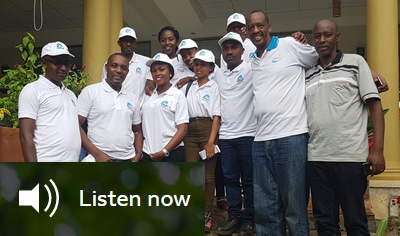
On this particular Day, Nile Basin Discourse also pays tribute Sustainable Development and Humanitarian Action (SDHA), a Rwanda based member organization involved in Humanitarian action and sustainable development. SDHA is member of Nile Basin Discourse Forum Rwanda and has been supporting communities for 6 years now.
Eng. Jean Pierre HAKIZIMANA, the SDHA’s Legal Representative says that they came together for synergy to contribute to poverty alleviation and humanitarian relief in Rwanda and great lakes region as a whole. SDHA has been supporting community members in making right choices of their development initiatives and action for Humanitarian relief in disasters, refugees and other needy people.
He says that their intervention is driven by a dream of a world in which people have sustainable livelihoods, equity and dignity and that their mission is to support poor communities affected by disasters, refugees and vulnerable groups particularly women and youth.
The organization’s scope and action are built on human centered approach to respond to number of issues faced by communities.
SDHA opted to focus on critical sectors which are Water, Hygiene and Sanitation (WASH), Humanitarian assistance, environment, agriculture and community livelihoods as well as youth and women empowerment.
Eng. Jean Pierre says that they believe that “well-designed interventions remain pointless if not backed by sound approach making it both effective and sustainable and this remains critical for development intervention.”
He says that they aligned their intervention with specific approaches to exemplify community development models that can work in Rwandan context in order to boost the economic change.
How their intervention benefits communities?
Eng. Jean Pierre attributes the success of their intervention to “VITAL”, the motto translated as Village Based Initiative,
Listen to this podcast
He affirms that their accomplishment is linked with their origination’s interlinked principles: Community Participation, self-reliance, action research and capacity building.
According to him, since 2014 to date, SDHA used innovative self- reliance approach to support 7000 beneficiaries whose about three 3000 community members have access clean water and sanitation services.
Moreover, SDHA also brought technical support to small scale farmers, for food security and income generation especially for women and youth cooperatives in different sectors.
Young boys and girls from vulnerable families were assisted to access to basic education in Muhanga District located in Southern Province of Rwanda.
Rwanda recently faced duo crisis which are heavy rains and the covid-19 pandemic. Heavy rains of mid-march to June 2020 claimed dozens of lives and thousands of farms destroyed by floods.
The same period coincided with lockdown imposed by the government in the fight against Corona virus speared. This has affected many in terms of employment.
As the fight against the Covid-19 pandemic, Eng. Jean Pierre says that SDHA stretched its Humanitarian support to people affected by disasters, COVID-19 pandemic, and other patients at different health centers. This was done together with creating public awareness on Covid-19, Ebola and climate disasters. To this end they have planted trees on a scale of 32 hectares. To foster environmental action, tree planting, watershed management and related action research remain our core action.
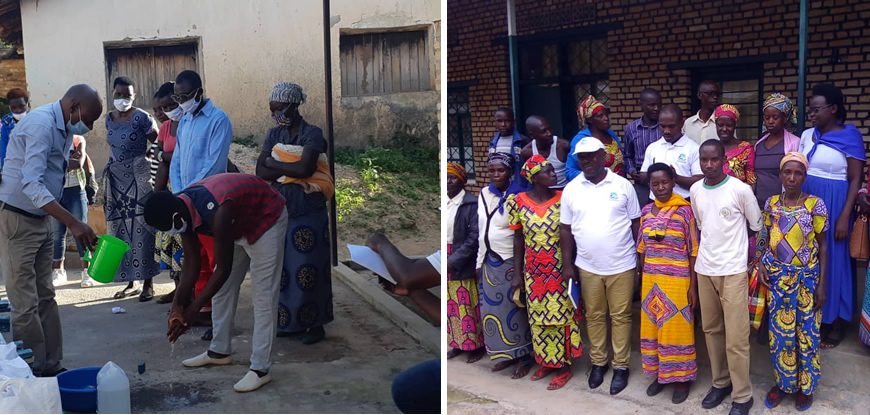
In this photo: SDHA sensitising communities on standard operating procedures for prevention of COVID-19; and the support for women cooperatives program